
Texas Recent Arrests
Texas recent arrests are public records you can look up through sheriff's offices, police departments, and online jail rosters across the state. The state has 254 counties, and each one runs its own jail and keeps its own booking records. Many counties post arrest data on their websites for free. You can search by name to find booking details, charges, bond amounts, and mugshots. The Texas Department of Public Safety also runs a statewide criminal history database. Whether you need to check on someone held at a county jail or look up a recent arrest in a specific city, this page covers how to find that information and where to search.
Texas Recent Arrests Overview
Where to Find Texas Recent Arrests
Most recent arrests in Texas show up first at the county level. Each of the 254 counties has a sheriff's office that runs the local jail. When someone gets booked, the jail creates a record with the person's name, charges, bond amount, and mugshot. Many counties post this data on their websites through jail rosters or inmate search tools. Some use systems like Tyler Technologies Odyssey, Southern Software, or VINELink to make records available to the public around the clock.
City police departments also make arrests, but those records end up at the county jail. If a person is arrested by a city officer, they get booked at the county detention center. So the county sheriff's office is almost always the best place to start when looking up recent arrests. Larger cities like Houston, Dallas, San Antonio, and Austin have their own records divisions too, and some post arrest logs or crime blotters on their websites.
At the state level, the Texas Department of Public Safety Crime Records Division collects arrest data from local agencies statewide. Arresting agencies like police departments and sheriff's offices must report all arrest incidents to DPS within seven days of the incident. Each report includes demographic data, fingerprints, and arrest details. This information goes into the Computerized Criminal History System, which tracks arrests for Class B misdemeanor or higher offenses across Texas.
The screenshot below shows the DPS Crime Records Division page, which serves as the state hub for criminal justice data and arrest records.
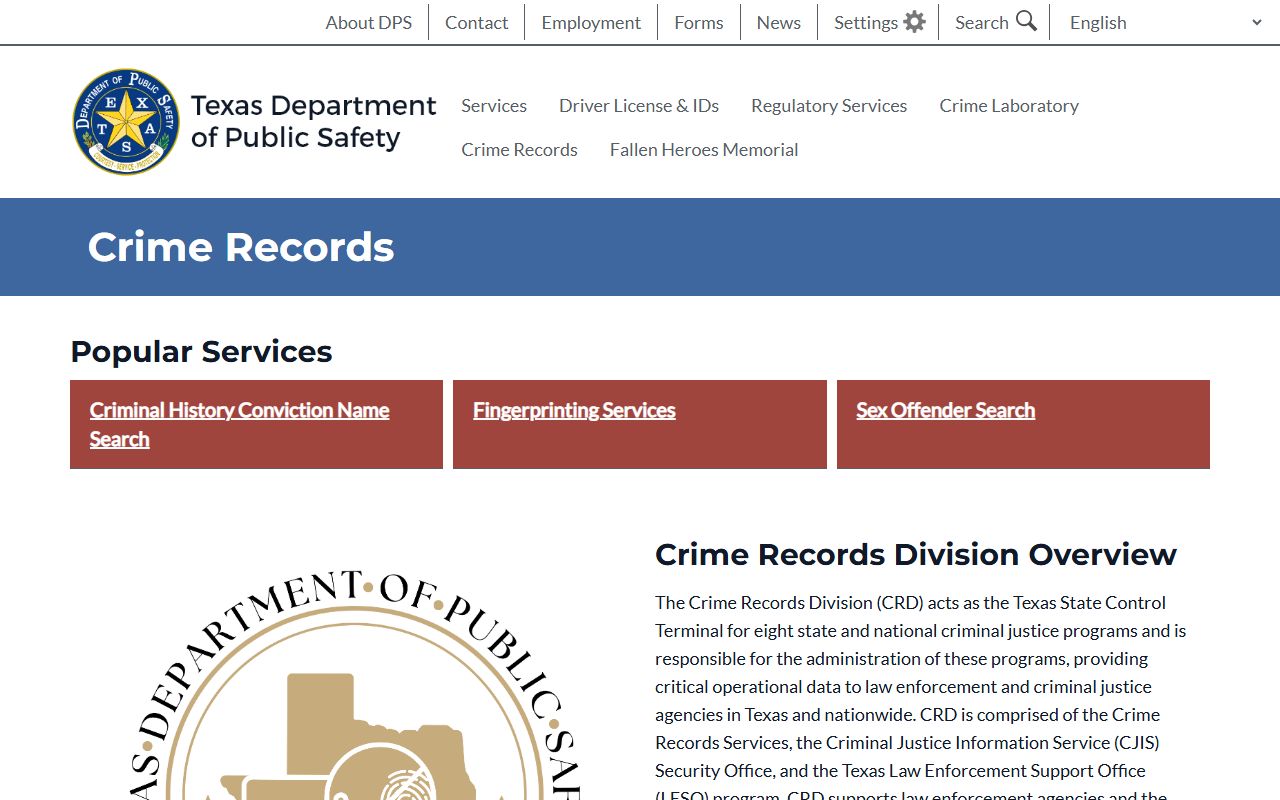
DPS supports law enforcement and the public by giving access to criminal justice information, including arrest data submitted by local agencies throughout Texas.
Note: County jail rosters show current inmates and recent bookings. For a full criminal history, use the DPS name search or fingerprint check.
Texas Recent Arrests DPS Search
The DPS Criminal History Name Search lets you look up arrest and conviction records statewide. You need to create an account and buy search credits. Each credit costs $3.00 and covers one search. Credit card payments add $0.25 plus 2.5% of the order total. You can also pay by check. The system uses credits even when no results come back, so have the right details ready before you search.
For the best chance at finding a match, you need the person's first and last name. A middle name or maiden name helps narrow things down. Date of birth is optional but useful. The Computerized Criminal History System contains arrest, prosecution, and disposition data for people arrested for Class B misdemeanor or greater violations of Texas criminal statutes, as outlined in Texas Government Code Chapter 411. Section 411.135 specifies that record information reflects only data submitted by reporting agencies and authorized for release on the date of request. DPS does not guarantee that a match belongs to the person you searched for. Fingerprint checks are the only sure way to link someone to a record.
The screenshot below shows the Texas Judicial Case Search portal, which covers appellate court records across the state.
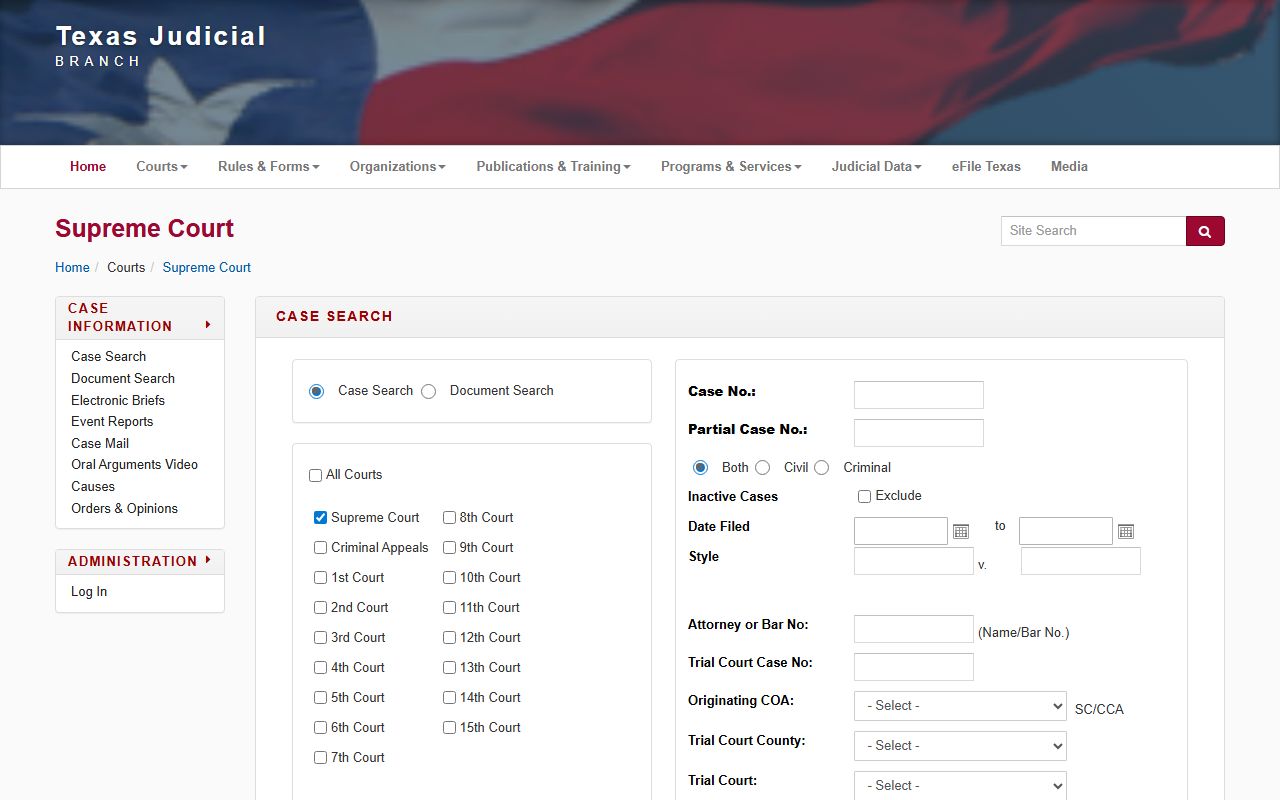
The Texas Judicial Branch Case Search covers the Supreme Court, Court of Criminal Appeals, and all 14 Courts of Appeals. Data refreshes nightly and is not real time. For trial court cases, use the county clerk or district clerk search tools instead.
Texas Arrest Records and Public Access
Arrest records in Texas are public. Texas Government Code Chapter 552, known as the Public Information Act, gives you the right to access government records. You do not have to explain why you want the information. All government data is presumed available unless a specific law says otherwise.
Section 552.108 has exceptions for some law enforcement records. Information can be held back if releasing it would interfere with an active investigation or prosecution. But Section 552.108(c) makes clear that basic arrest information cannot be withheld. That basic info includes the name, age, address, race, sex, and occupation of the arrested person, plus the date and time of the arrest, the place, the offense charged, booking details, bonding information, and the names of the arresting officers.
The Texas Attorney General's office oversees compliance with the Public Information Act. If a government body fails to release records within ten business days, you can file a complaint with the Open Records Division. They must release at least basic information within five business days. Complaints can also be filed if a body fails to comply with an attorney general ruling.
The screenshot below shows the Attorney General's Public Information Act overview page.
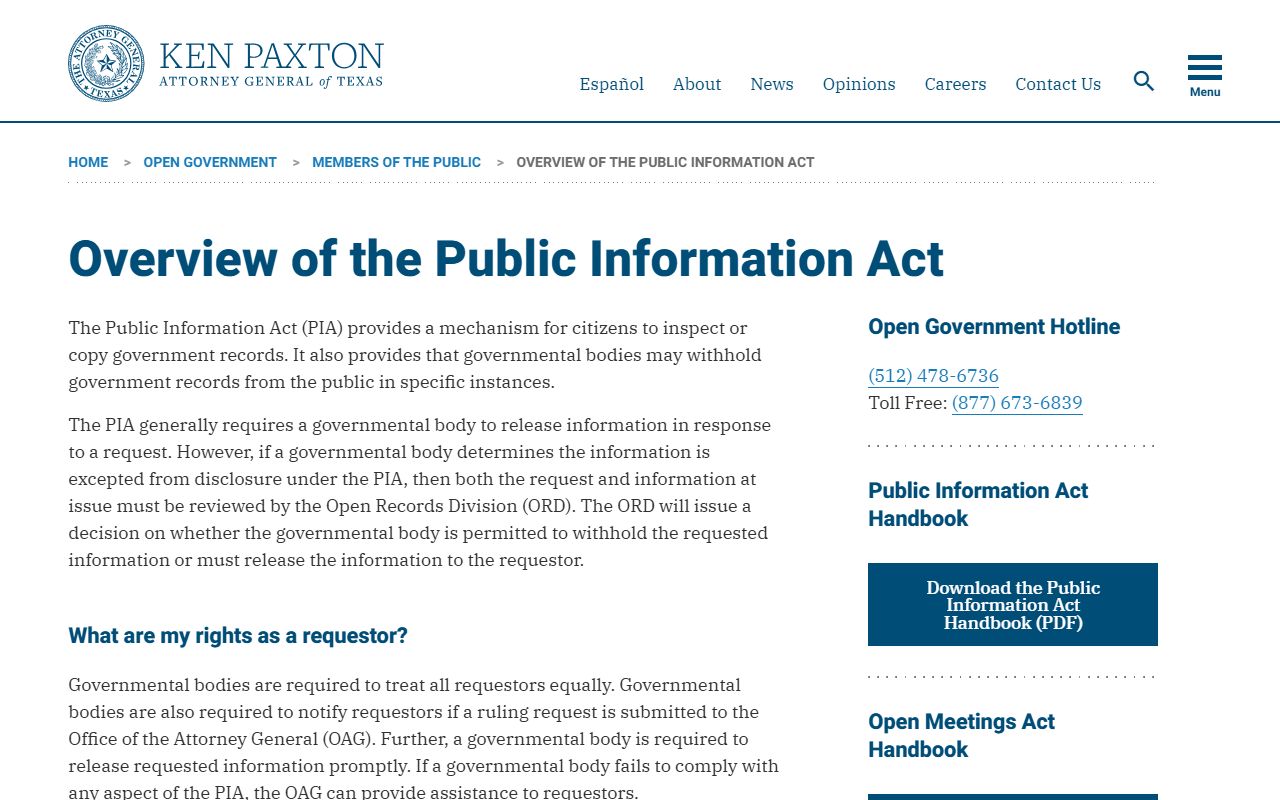
This page outlines how citizens can inspect or copy government records, including arrest records held by law enforcement agencies across Texas.
Texas Recent Arrests and State Inmates
For people sent to state prison, the Texas Department of Criminal Justice Inmate Search is the tool to use. It is free. You can search by name, SID number, or TDCJ number. The minimum input is a last name and first initial. The system searches for exact matches on last name.
Offenders serving less than one year typically stay at county jails. Longer sentences go to state prison facilities under TDCJ. The general information line is (800) 535-0283. For offender status before a Board vote, call (844) 512-0461. After a Board vote, use (512) 406-5202. Juvenile records are private and not available through this system. Contact the Texas Juvenile Justice Department for those.
The screenshot below shows the TDCJ Inmate Search portal for finding state prison inmates.
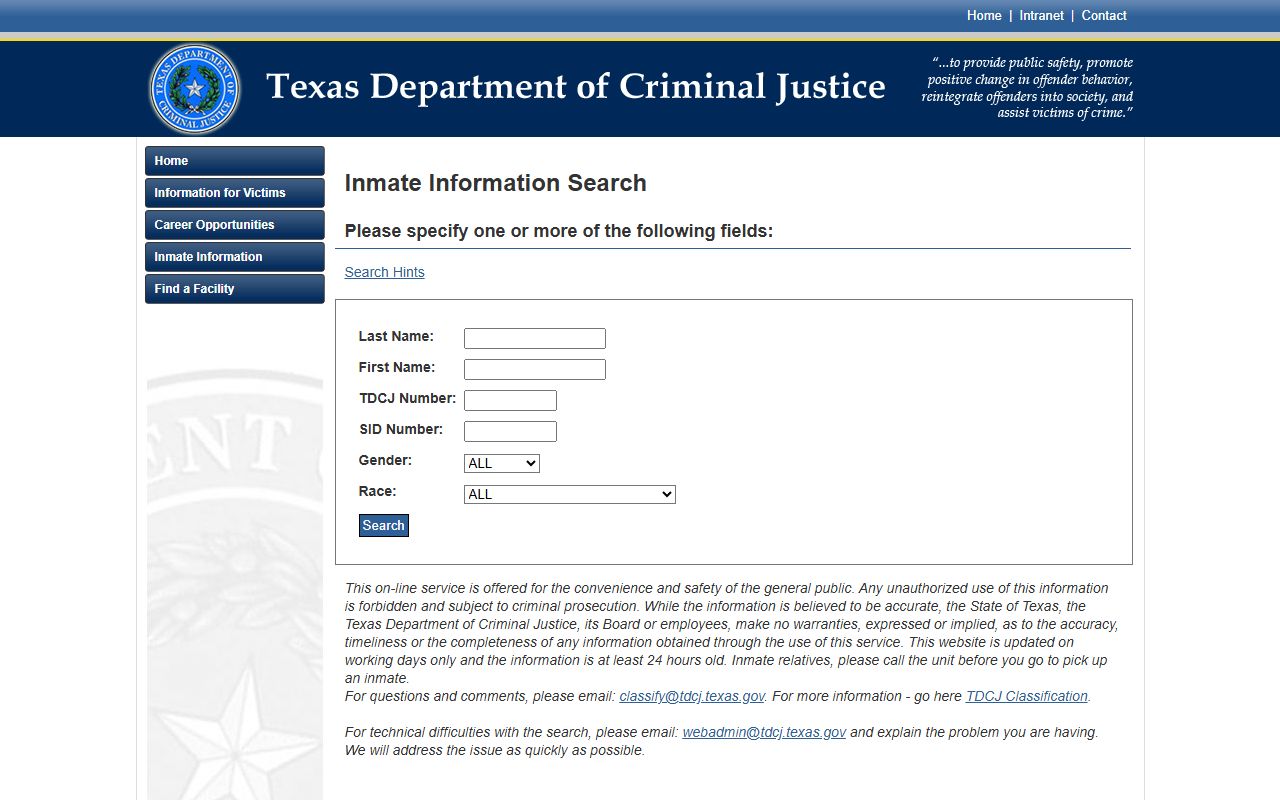
TDCJ maintains this free search tool for locating inmates in state correctional facilities across Texas. Local sheriff's offices run and manage all county jails separately.
Texas Arrest Records and Law Enforcement
The Texas Commission on Law Enforcement regulates all peace officers, jailers, and telecommunications personnel in the state. TCOLE oversees roughly 2,800 law enforcement agencies and more than 100,000 licensed officers. The commission sets training standards and runs a searchable database of licensed peace officers. You can also file complaints against officers through TCOLE.
The screenshot below shows the TCOLE website, which regulates Texas law enforcement officers.

TCOLE works with DPS on keeping criminal history information accurate. The commission conducts audits of local agencies for compliance with state standards and FBI CJIS policies.
Under Government Code Section 411.087, access to detailed criminal history records is limited to qualified entities including the record subject and authorized representatives. But basic arrest data, as defined by the Public Information Act, remains open to anyone who asks. The DPS Crime Records Services team collects information submitted by local criminal justice agencies and compiles it into statewide databases. That data also gets forwarded to the FBI's national criminal justice databases.
Texas Laws on Recent Arrests Access
Several Texas statutes shape how arrest records are handled and who can see them. Government Code Chapter 411 covers the DPS criminal history system. Section 411.135 limits public access to conviction and deferred adjudication records only when going through the DPS portal. But this does not block access to basic arrest information held by local agencies.
The fee for a DPS name search through formal channels is $10.00, payable by check or money order. The online portal charges $3.00 per credit. If your search matches fewer than fifteen records, data for all matches gets sent back. More than fifteen matches means you need more specific search terms. Government Code Section 552.029 also establishes the right to access information about inmates of the Department of Criminal Justice.
The screenshot below shows the Texas Government Code Chapter 552 page, which establishes the Public Information Act.
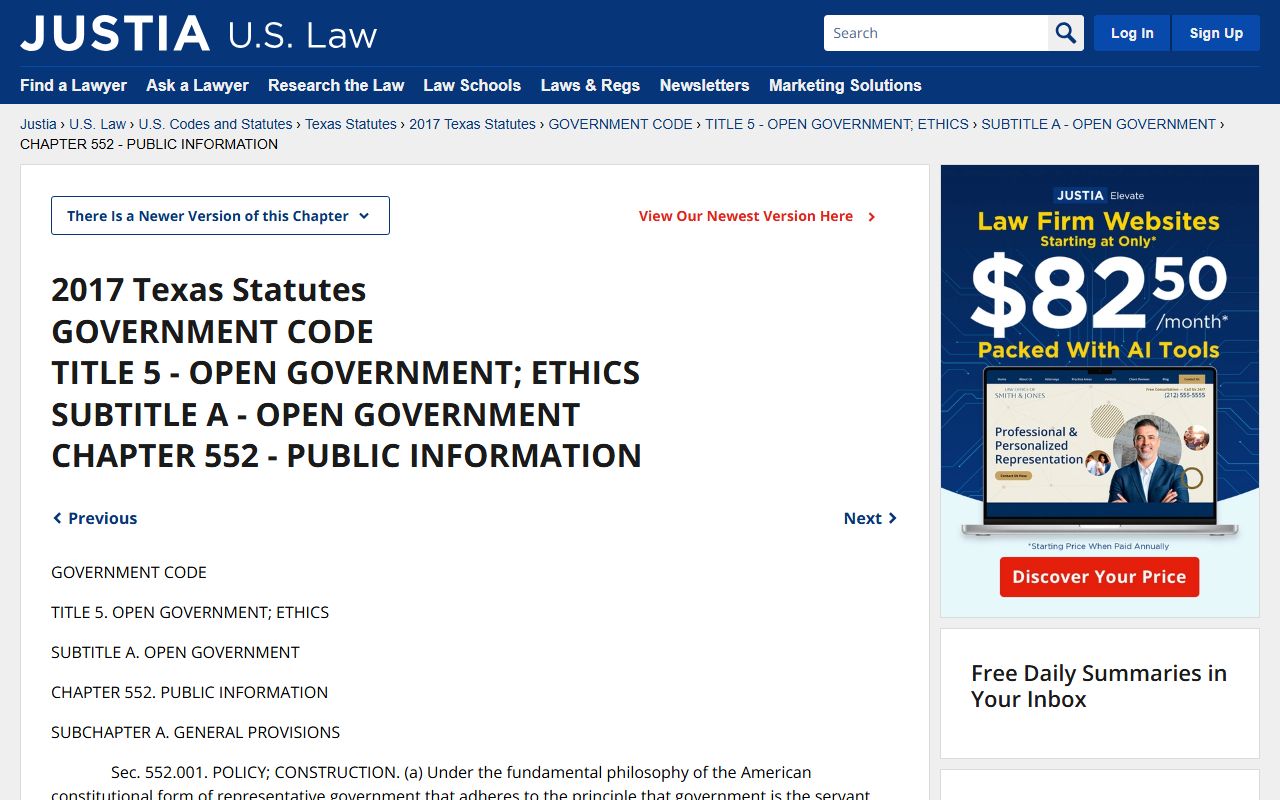
Governmental bodies must respond to records requests promptly. If they need more than ten business days, they have to notify you when the information will be ready.
Browse Texas Recent Arrests by County
Each of the 254 Texas counties has its own sheriff's office that handles arrests, bookings, and jail records. Pick a county below to find local jail rosters, inmate search tools, and arrest records for that area.
Recent Arrests in Major Texas Cities
City police departments make arrests that get processed at the county jail. Pick a city to find out where to look for recent arrest records in that area.